
Contents
Flooded homes face serious challenges when it comes to moisture management. Effective dehumidification is essential for preventing mold growth and structural damage. By implementing specific techniques, you can greatly improve the drying process. From industrial dehumidifiers to strategic airflow and moisture-absorbing materials, each method serves a unique purpose. Understanding how to combine these techniques can make all the difference in your recovery efforts. What’s the best approach for your situation?
Key Takeaways
- Utilize high-capacity industrial dehumidifiers for extensive moisture removal in large flooded areas, ensuring effective drying.
- Implement air circulation techniques by strategically placing fans to enhance airflow and direct it toward damp spots.
- Use portable dehumidifiers in smaller rooms for targeted moisture control and effective drying solutions.
- Incorporate moisture-absorbing materials like silica gel and calcium chloride to further reduce humidity levels in affected areas.
- Open windows and doors for natural ventilation, improving air quality and supporting moisture evaporation during recovery efforts.
Utilizing Industrial Dehumidifiers
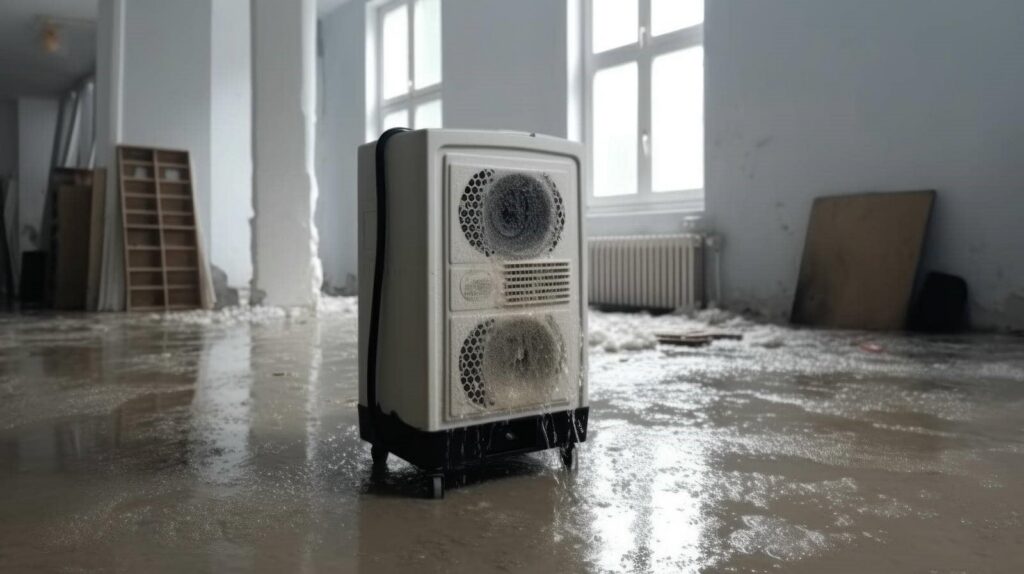
When tackling the aftermath of flooding, utilizing industrial dehumidifiers can be a game-changer.
These powerful machines effectively remove excess moisture from the air, helping to prevent mold growth and structural damage. One of the key industrial dehumidifiers benefits is their ability to handle large spaces quickly, making them ideal for flooded homes.
When selecting dehumidifier types, consider the size of the area and the severity of the water damage. For instance, high-capacity models are perfect for extensive flooding, while portable units can work well in smaller rooms.
You’ll want to ascertain you choose a unit with the right moisture removal rate for your needs. With the right industrial dehumidifier, you can create a healthier living environment, restore comfort, and protect your home from long-term damage.
Embracing this technology can truly make a difference in your recovery journey.
Implementing Air Circulation Techniques
To effectively combat the lingering humidity after a flood, implementing air circulation techniques is essential.
Start by strategically placing fans throughout your home. Position them to create a cross-breeze, directing airflow toward the dampest areas. This encourages moisture evaporation and helps reduce humidity levels.
Don’t forget about ventilation management—open windows and doors whenever possible to allow fresh air in and stale air out. This natural airflow can dramatically improve indoor conditions.
Consider using box fans or oscillating fans to enhance circulation, ensuring they’re not blowing directly at any one spot for too long. Rotate them regularly to optimize their effectiveness.
Remember, the goal is to keep air moving, which minimizes stagnant pockets where moisture can linger.
Employing Moisture Absorbing Materials
Moisture-absorbing materials can be invaluable in your efforts to reduce humidity after a flood.
These materials help in eliminating excess moisture and contribute to a healthier environment.
Here are some effective options you can use:
Silica gel: This powerful desiccant absorbs moisture quickly and can be placed in small containers throughout your home.
Charcoal briquettes: Not just for grilling, these natural absorbers can draw out humidity and also help eliminate odors.
Baking soda: A household staple that’s excellent for absorbing moisture; simply place open containers around your space.
Calcium chloride: Often found in dehumidifiers, this compound effectively pulls moisture from the air.
Frequently Asked Questions
How Long Does It Take to Fully Dry a Flooded Home?
Drying a flooded home typically takes between 3 to 7 days, depending on moisture levels and ventilation. You’ll want to monitor progress closely to ensure effective drying, preventing mold and further damage to your property.
What Health Risks Are Associated With Flooding?
Flooding increases your risk of health issues— most flood-related illnesses stem from waterborne diseases and respiratory issues. You should take precautions to protect yourself and your loved ones from these serious health threats.
Can I Use My Home Dehumidifier for Flooding?
Yes, you can use your home dehumidifier for flooding, but its efficiency might be limited. For effective flood damage restoration, consider using multiple units or professional equipment to handle extensive moisture.
Should I Remove Furniture Before Dehumidification?
You should definitely remove furniture before dehumidification; it’s better safe than sorry. Protecting your furniture ensures a smoother drying process, preventing damage and mold. Remember, a stitch in time saves nine—act wisely!
How Can I Prevent Mold After Flooding?
To prevent mold after flooding, ensure moisture control by drying surfaces quickly, using fans and dehumidifiers. Regularly check for damp spots and maintain ventilation; it’ll help you create a healthier, mold-free environment in your home.
Conclusion
Tackling excess moisture in flooded homes can feel like battling a relentless storm, but with the right techniques, you can reclaim your space. By utilizing industrial dehumidifiers, implementing effective air circulation, and employing moisture-absorbing materials, you can swiftly restore a healthy environment. Don’t underestimate the power of these methods; they can turn your soggy nightmare into a dry, safe haven. Take action now, and watch your home transform back to its former glory!
Recent Posts
What Is a Sewage Spill Remediation Company?
If your basement backs up with sewage after a heavy storm, you need more than
Emergency Flood Cleanup for Water Damage Response
If you lose power just as water starts rising, you have a flood response problem
7 Emergency Flood Cleanup Tips
You might not realize that floodwater can hide electrical hazards and structural damage even after