
Contents
When dealing with flooded homes, advanced dehumidification techniques can make a significant difference in recovery. You’ll want to utilize industrial dehumidifiers for rapid moisture extraction and enhance airflow with strategically placed air movers. Adding heat can further speed up the drying process. But that’s just the beginning. Understanding moisture mapping and effective chemical drying agents can transform your approach. Let’s explore these methods to ensure your home is restored effectively.
Key Takeaways
- Utilize industrial dehumidifiers to rapidly extract moisture, protecting structures and preventing mold growth in flooded homes.
- Implement air movers strategically to enhance airflow, directing moist air towards dehumidifiers for efficient drying.
- Employ heat sources to increase evaporation rates, ensuring optimal drying conditions while monitoring temperatures to avoid damage.
- Conduct moisture mapping with sensors to identify high-humidity areas, allowing for targeted dehumidification and efficient moisture extraction.
- Consider chemical drying agents like silica gel and calcium chloride for additional moisture absorption, ensuring humidity levels remain below 60%.
Utilizing Industrial Dehumidifiers
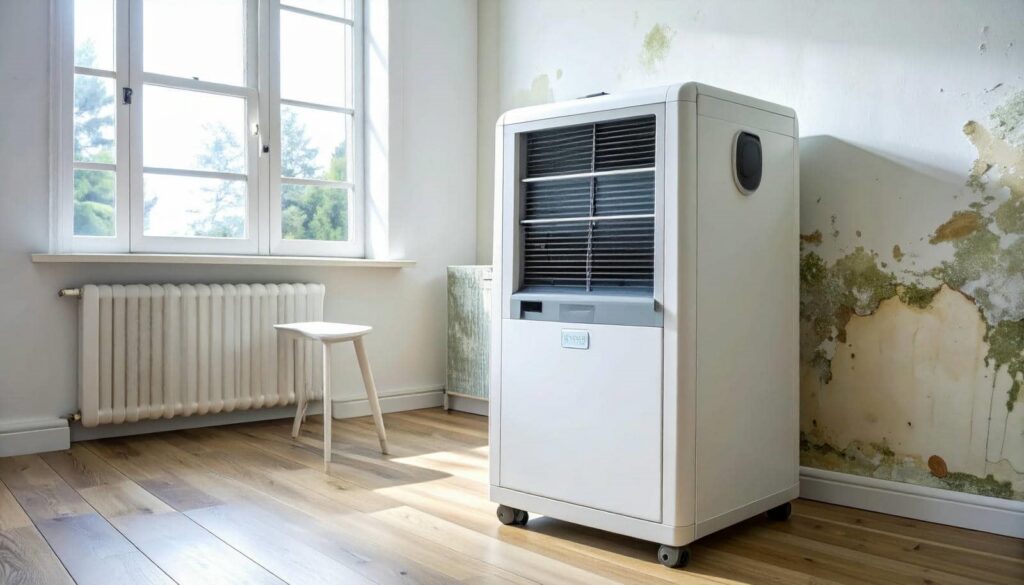
When you’re dealing with large-scale humidity control, utilizing industrial dehumidifiers can greatly enhance efficiency and effectiveness. These machines are designed with industrial capacity, ensuring they can handle significant moisture extraction demands in flooded environments.
By employing high-capacity models, you can rapidly reduce humidity levels, protecting structures and contents from further water damage.
Industrial dehumidifiers operate using advanced technology, allowing for precise control over moisture levels. They pull in humid air, removing moisture through condensation, and release dryer air back into the environment.
This process speeds up drying times and creates a healthier living space by preventing mold growth and improving air quality.
In choosing the right dehumidifier, consider factors like coverage area and extraction rates. You’ll find that investing in these powerful units fosters a sense of security, knowing you’re taking effective steps to restore and protect your property.
Implementing Air Movers for Enhanced Airflow
Air movers are fundamental tools for enhancing airflow in moisture-prone environments. By strategically implementing these devices, you can greatly improve the drying process after a flood.
Start by analyzing your space to determine ideal equipment placement. Position air movers to create effective airflow patterns that direct moist air towards dehumidifiers, ensuring maximum moisture removal.
It’s vital to maintain a balance in equipment placement; too many air movers in one area can lead to stagnant airflow, while too few may not achieve adequate circulation.
Consider placing air movers at various heights to target different surfaces, allowing for thorough drying in all corners of the room.
Regularly monitor the airflow and adjust the direction of the air movers as needed. This proactive approach accelerates drying while minimizing the risk of mold growth, creating a healthier environment for you and your family.
The Role of Heat in Accelerating Drying
Although moisture removal is essential, the role of heat in accelerating drying shouldn’t be overlooked. By introducing effective heat sources, you can considerably reduce drying time in flooded homes.
Heat increases the air’s capacity to hold moisture, allowing for more efficient evaporation from wet surfaces.
When using heat, consider options like electric heaters or specialized drying equipment designed for this purpose. Positioning these heat sources strategically can enhance airflow and create a conducive environment for rapid drying.
It’s important to monitor the temperature during the process; excessive heat can damage materials or create other issues.
Aim for a balanced approach—combine heat with dehumidification techniques for ideal results.
Moisture Mapping for Targeted Dehumidification
How can you ensure efficient dehumidification in a space affected by moisture? The answer lies in moisture mapping. By utilizing moisture sensors, you can pinpoint areas with excessive humidity, allowing for targeted extraction.
This technique involves strategically placing sensors throughout the affected space to gather real-time data on moisture levels.
Once you identify high-humidity zones, you can deploy dehumidifiers more effectively. Instead of treating the entire area uniformly, you’ll focus on hotspots, which maximizes the dehumidification process. This targeted approach speeds up drying and conserves energy and resources.
Moreover, moisture mapping helps you monitor progress throughout the drying process. As moisture levels decrease, you can adjust your dehumidification strategy accordingly, ensuring peak efficiency.
Chemical Drying Agents and Their Applications
When faced with persistent moisture issues, chemical drying agents offer an effective solution for accelerating the drying process. These agents utilize chemical absorption to capture and remove excess moisture from surfaces and materials, enhancing moisture control in flooded environments.
Common types of chemical drying agents include silica gel, calcium chloride, and molecular sieves. Silica gel is particularly versatile, effectively pulling moisture from the air and surfaces while being safe for various materials.
Calcium chloride, on the other hand, excels in high humidity situations, absorbing water and reducing dampness considerably.
To apply these agents, spread them in affected areas or place them in dehumidifiers. Monitoring humidity levels is essential; aim for a relative humidity below 60% to prevent mold growth.
Frequently Asked Questions
How Long Does It Take to Completely Dry a Flooded Home?
It typically takes three to seven days to completely dry a flooded home. Your drying timeline depends on factors like humidity levels, temperature, and airflow, so monitor these to ensure efficient drying and prevent mold growth.
What Are the Health Risks of Mold Growth After Flooding?
Mold health risks after flooding can include respiratory issues, allergic reactions, and skin irritations. Understanding these flood consequences is essential for your well-being, so take action promptly to mitigate mold growth and protect your environment.
Can I Use Household Dehumidifiers for Severe Flooding?
Household dehumidifiers can struggle with severe flooding, as they typically handle about 30-50 pints of moisture daily. For significant water damage, consider industrial units for effective moisture removal and to prevent mold growth.
What Signs Indicate That a Home Is Still Damp?
You’ll notice signs of dampness through moisture indicators like musty odors, peeling paint, or mold growth. For accurate damp detection, regularly check hidden areas, such as basements and behind appliances, ensuring your home remains safe and comfortable.
How Do I Prevent Future Flooding in My Home?
To prevent future flooding in your home, install water barriers, maintain gutters, and ensure proper grading. Isn’t it comforting to know that proactive steps can safeguard your space and create a sense of security?
Review
In the quest to restore a flooded home, think of your dehumidification strategy as a well-orchestrated symphony. Each element—industrial dehumidifiers, air movers, heat, moisture mapping, and chemical agents—plays an essential role, harmonizing to combat the chaos of moisture. By employing these advanced techniques, you reclaim your space while safeguarding it against the silent menace of mold and decay. Embrace this proactive approach, and let your home thrive once more in a balanced environment.
Recent Posts
Effective Sewage Removal and Mold Prevention Guide
When faced with plumbing mishaps, it’s vital to address the situation promptly and efficiently. Your
What Are Effective Emergency Sewage Removal Tips?
When disaster strikes with sewage flooding your space, the urgency contrasts sharply with the need
5 Best Emergency Sewage Removal and Mold Prevention Tips
In the chaos of a sewage emergency, your home can feel like a sinking ship.