
Contents
Many flood-damaged buildings develop mold within 48 hours, so you need to act fast. You should inspect hidden spaces, remove standing water, and dry materials before spores spread deeper into walls and flooring. If you delay, porous items can become permanent reservoirs, and sewage exposure raises the risk further. The real challenge starts when the moisture looks gone but contamination remains.
Key Takeaways
- Inspect flooded areas within 24–48 hours for musty odors, visible mold, and hidden moisture behind walls, baseboards, and cabinets.
- Remove standing water immediately, then dry the area with fans, dehumidifiers, and ventilation to keep humidity below 60%.
- Discard porous materials like carpet, insulation, and damaged drywall that cannot be cleaned and dried quickly.
- Shut off electricity before entering flooded areas, and wear protective gear when handling moldy or contaminated materials.
- Call certified mold remediation professionals if mold spreads widely, or if framing, subfloors, or insulation are heavily soaked.
How to Spot Mold After Flooding
After flooding, you can spot mold by checking for visible growth, musty odors, and moisture-damaged materials within 24 to 48 hours.
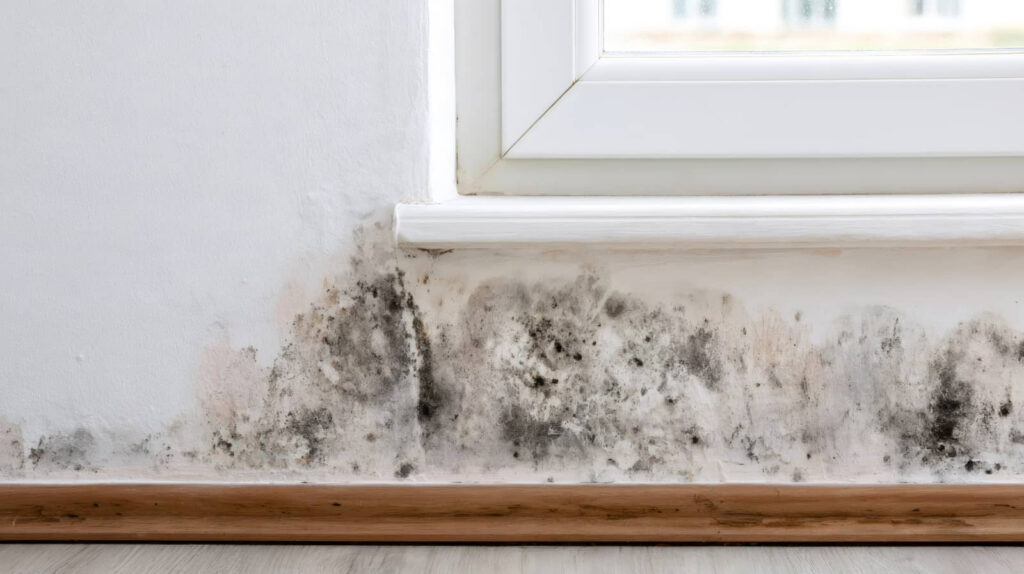
You’ll often see fuzzy, speckled, or slimy patches on drywall, wood, carpet, and insulation. Different mold types can appear green, black, white, or gray, so don’t rely on color alone.
Use detection methods that include close visual inspection, a flashlight for dark corners, and a hygrometer to verify elevated humidity.
Inspect behind baseboards, under sinks, and inside closets where moisture lingers. If you notice a persistent earthy smell, treat it as a strong indicator of hidden contamination.
Stop Mold Growth in the First 24 Hours
Once you’ve identified likely mold activity, act immediately to slow or stop growth in the first 24 hours. Your rapid response matters because spores can colonize damp surfaces quickly.
Shut off the source of moisture, if you can do so safely, and reduce indoor humidity with ventilation or dehumidification. Remove wet contents from the affected area, separate salvageable items from contaminated ones, and bag porous materials that can’t be cleaned.
Wear gloves, an N95 respirator, and eye protection to limit exposure. Keep people and pets out of the zone while you work. Document conditions with photos for insurance and remediation planning.
This mold prevention window is short, so coordinate with trusted professionals and act as a team.
Dry Out Flooded Walls, Floors, and Furniture
If floodwater has soaked walls, floors, or furniture, you need to dry them quickly and completely to limit mold growth and structural damage. Open windows when weather allows, run dehumidifiers, and use fans to move air across wet surfaces.
Remove baseboards if they trap moisture, and check hidden cavities with a moisture meter. For furniture restoration, lift cushions, separate drawers, and dry each piece from all sides.
For wall treatment, expose damp framing and insulation enough to speed evaporation without delaying repair. Keep indoor humidity below 60% and inspect daily for lingering dampness.
- Drying works best when you act as one team.
- Moisture left behind invites mold and weakens materials.
- Careful airflow protects your home and your community.
Throw Away Water-Damaged Porous Materials
Discard water-damaged porous materials that can’t be thoroughly cleaned and dried, because they hold moisture deep inside and quickly become mold reservoirs. You should remove carpet, carpet padding, ceiling tiles, insulation, upholstered items, and particleboard that stayed wet after flooding.
During mold assessment, inspect each item for swelling, delamination, staining, and persistent odor; if the material has absorbed contaminated water, plan material disposal instead of salvage.
Bag or wrap debris to limit spread, then move it out of the living area promptly. Keep the affected zone clear so your household can reset faster and with less risk.
When you’re decisive about throwing out unsalvageable porous materials, you protect the rest of the structure and help your team restore a safer, healthier indoor environment.
Clean Mold Safely With the Right PPE
Before you scrub mold, put on the right personal protective equipment so you don’t inhale spores or carry contamination to clean areas.
Wear an N95 or better respirator, nonporous gloves, goggles, and long sleeves; seal cuffs and pant legs to limit skin contact.
Keep your kit on until you finish, then remove it carefully and bag it before washing exposed clothing.
Use mold cleanup techniques that control dust: lightly mist surfaces, scrub with detergent, and wipe debris into disposable towels.
Never dry sweep, and keep windows open for cross-ventilation when conditions allow.
- Protect yourself first, so you can work confidently.
- Contain debris to prevent spread through your home.
- Clean methodically to support your household’s recovery.
When Flood Damage Requires Professional Remediation
If you see visible mold spreading across multiple surfaces, you’re past the scope of simple cleanup and need professional remediation.
You also need specialized service when floodwater has soaked framing, insulation, or subfloors, because those materials require controlled structural drying.
In both cases, delaying remediation increases contamination, material loss, and the risk of hidden mold growth.
Visible Mold Spread
When mold has spread beyond a small, isolated patch and you can see growth on multiple surfaces, the cleanup usually requires professional remediation. You’re likely dealing with several mold types, and each one can release spores that raise health risks, especially if you have allergies, asthma, or weakened immunity.
A trained team can inspect visible colonies, identify contamination patterns, and isolate affected areas before removal starts.
- Widespread spotting signals active growth, not just staining.
- Surface colonization across rooms suggests hidden contamination.
- Musty odor plus visible spread means you shouldn’t delay.
You deserve a safe, informed response, and acting early helps protect your household and keeps you connected to a recovery plan that’s thorough, controlled, and effective.
Structural Drying Needs
Structural drying is essential after flooding because soaked framing, subfloors, insulation, and wall cavities can retain moisture long after surfaces feel dry.
You need professional remediation when water has penetrated structural materials, because hidden dampness drives mold growth and weakens building assemblies.
Technicians use moisture meters, dehumidifiers, and targeted air movement to restore moisture control and verify that drying reaches safe levels.
You can’t rely on fans alone; proper air circulation must move across and through enclosed spaces.
If drywall is swollen, flooring is cupped, or musty odors persist, your structure likely still holds water.
Prompt drying protects your home, your health, and your place in a resilient community.
Handle Sewage-Contaminated Mold Safely
Because sewage-contaminated mold can expose you to bacteria, viruses, and toxic contaminants, you should treat it as a biohazard and not handle it like ordinary mold. Protect your mold health by keeping children, pets, and untrained helpers away.
Wear disposable gloves, boots, eye protection, and a tight respirator before you enter the area. Bag contaminated materials immediately and seal them for disposal according to local sewage hazards rules.
- You reduce cross-contamination when you isolate affected items fast.
- You protect your team when you follow documented biohazard procedures.
- You support recovery when you report hidden contamination without delay.
If you smell sewage or see blackened waterline residue, stop work and request qualified remediation. Your household belongs in a safe, controlled cleanup plan.
Use HEPA Filtration During Remediation
During mold remediation, use HEPA filtration to capture airborne spores, dust, and fine debris before they spread through the structure. You’ll improve containment by placing air scrubbers near the work zone and running them continuously while you remove damaged materials.
Verify that the HEPA filters are rated for fine particulates and replace them per the manufacturer’s schedule so performance doesn’t drop. Keep doors closed and seal openings to help the system maintain negative pressure.
Check airflow often, because steady circulation supports better air quality and reduces recontamination. When you and your team rely on HEPA filtration, you control exposure more effectively, protect adjacent rooms, and create a safer, more coordinated remediation process for everyone involved.
Prevent Mold in a Flooded Basement
To prevent mold in a flooded basement, you need to remove standing water immediately, because mold can begin growing within 24 to 48 hours.
Then you should dry all surfaces quickly with dehumidifiers, fans, and open ventilation pathways to reduce moisture to safe levels.
You also need to keep monitoring humidity and hidden damp areas until the basement is fully dry.
Rapid Water Removal
Act quickly to remove standing water from the flooded basement, because mold can begin growing within 24 to 48 hours. You should prioritize water extraction with pumps, wet vacuums, or a pro service if the volume is high. Fast removal limits material saturation and supports your flood preparedness plan.
Shut off electricity before you enter; safety comes first.
Remove water from corners, under stairs, and around utility edges.
Document the damage so your team can coordinate repairs.
You’re not handling this alone; decisive action helps protect your home and the people in it. Focus on complete water extraction, because every hour of delay increases contamination risk and repair costs.
Keep the area clear, work methodically, and move to the next restoration step only after standing water is gone.
Drying and Ventilation
Once you’ve removed the standing water, start drying the basement immediately with high-velocity fans, dehumidifiers, and open air exchange if outdoor conditions allow.
Position equipment to push moist air toward exits and create continuous air circulation across floors, walls, and hidden cavities.
Keep humidity control tight by maintaining indoor relative humidity below 60 percent; use a hygrometer to verify readings every few hours.
Remove wet insulation, carpet, and drywall that can’t dry within 48 hours.
Open closet doors, cabinet faces, and access panels so trapped moisture can escape.
If outside air is damp, keep the basement closed and rely on mechanical drying.
You’re protecting your space, your health, and your neighbors’ homes by acting fast and staying consistent until surfaces are fully dry.
Hire a Certified Mold Remediation Team
Because flood damage can hide moisture inside walls, flooring, and insulation, you should hire a certified mold remediation team to assess the extent of contamination and remove it safely.
They’ll identify mold types, test affected materials, and apply remediation techniques matched to the hazard level. You gain a coordinated plan, clear communication, and a crew that works to restore your space without exposing your household to airborne spores.
- Verify certification, insurance, and flood-specific experience.
- Request containment, HEPA filtration, and moisture mapping.
- Confirm post-removal verification and cleanup documentation.
When you bring in qualified specialists, you join a process built on standards, not guesswork.
That protects your structure, supports recovery, and helps your home feel safe again.
Wrap-Up
When floodwaters recede, you must move fast or let mold play Trojan horse in your home. Inspect hidden spaces, remove water, dry materials, and discard porous items that can’t be saved. Wear proper PPE, treat sewage-contaminated areas as hazardous, and use HEPA filtration to trap spores. In a basement, control humidity and airflow. If contamination is extensive, call a certified mold remediation team. Act early, and you’ll protect both your structure and your health.
Recent Posts
Why Mold Remediation Matters After Flooding
After flooding, you need to act quickly because mold can begin growing within 24 to
What Do Sewage Spill Cleanup Experts Do?
When a sewage spill hits, your basement can feel like a locked chamber of contamination.
How to Handle Sewage Spills Safely
Most sewage spills aren’t just messy; they can expose you to pathogens and corrosive gases